Prototyping began in 2022
Stormball
A VR dodgeball prototype, with extensive work on ball replication and network latency.
- Contribution
- Prototyping and network development
- Platforms
- Meta Quest
- Project
- Prototype developed at Novelab
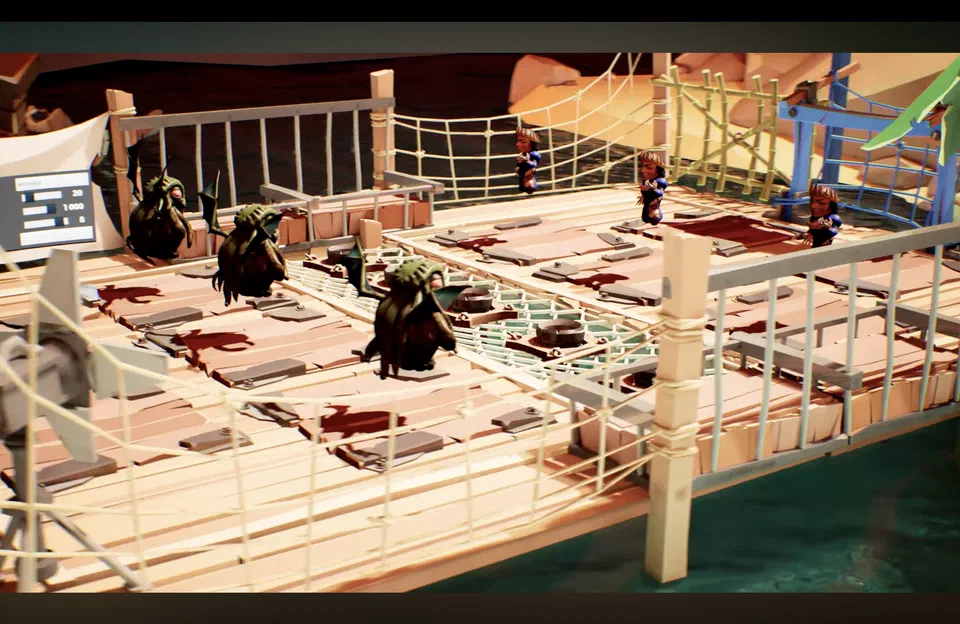
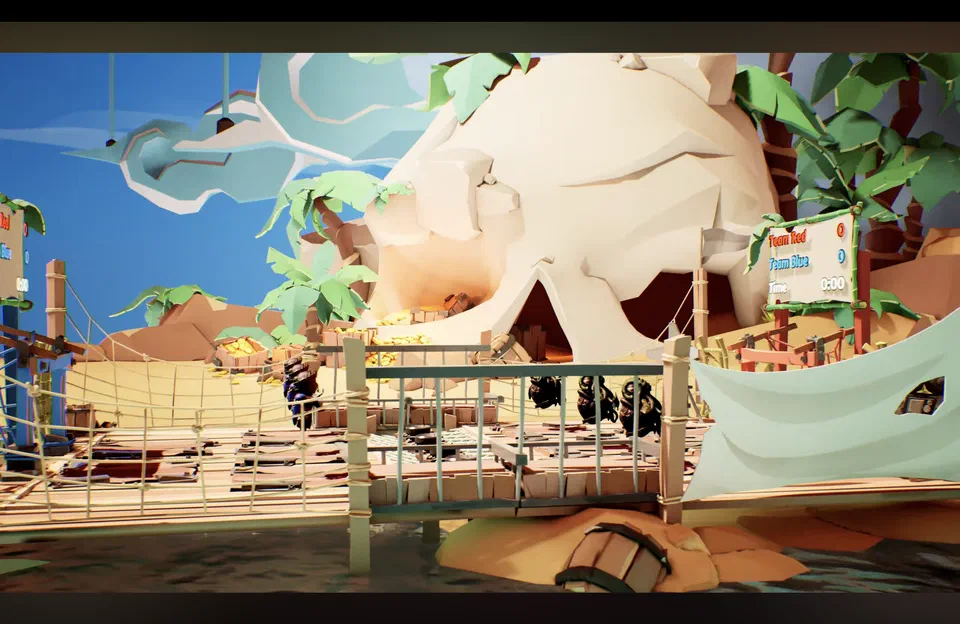
Stormball is a multiplayer VR game prototype developed at Novelab for Meta. The idea was to capture the exchanges of dodgeball: throwing, dodging and hitting opposing players inside an arena. The project started on Quest 1 in 2022.
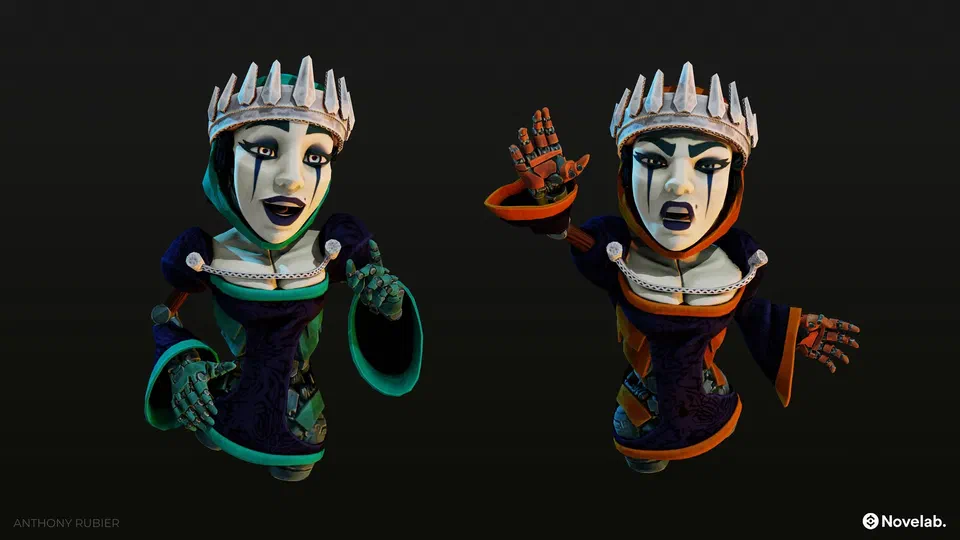
The prototype offered several avatars and teleportation within each player’s area. A player who was hit left the arena. These simple rules put accurate throwing and the perception of the ball at the center of the technical work.
From Unity to Unreal Engine
We initially worked with Unity and Photon Fusion 1. Early tests did not provide the network responsiveness we wanted. I then created an Unreal Engine 4 prototype with more convincing ball throwing on Quest.
The project gradually moved to Unreal. We used Meta’s fork to access its network relay services while helping a team in which many people were new to the engine.
Replicating a fast-moving ball
The main challenge was keeping trajectories consistent despite latency. We compared server-side replication, client-side replication and mixed approaches using interpolation and extrapolation.
This went beyond choosing a networking library. We had to adjust how each machine represented a fast-moving object and check that the result remained convincing during play.
Evolving the connections
We later moved to Epic Online Services to reduce the dependency on Meta’s networking services. LAN tests also helped compare behavior and isolate the effects of latency.
The visuals shown here are the work of Novelab’s art team. The avatars are credited to Anthony Rubier; the public environment breakdown credits Renaud De Bellefon for art direction, Timothé Bouflet for concepts and Hugo Peillet for asset production.