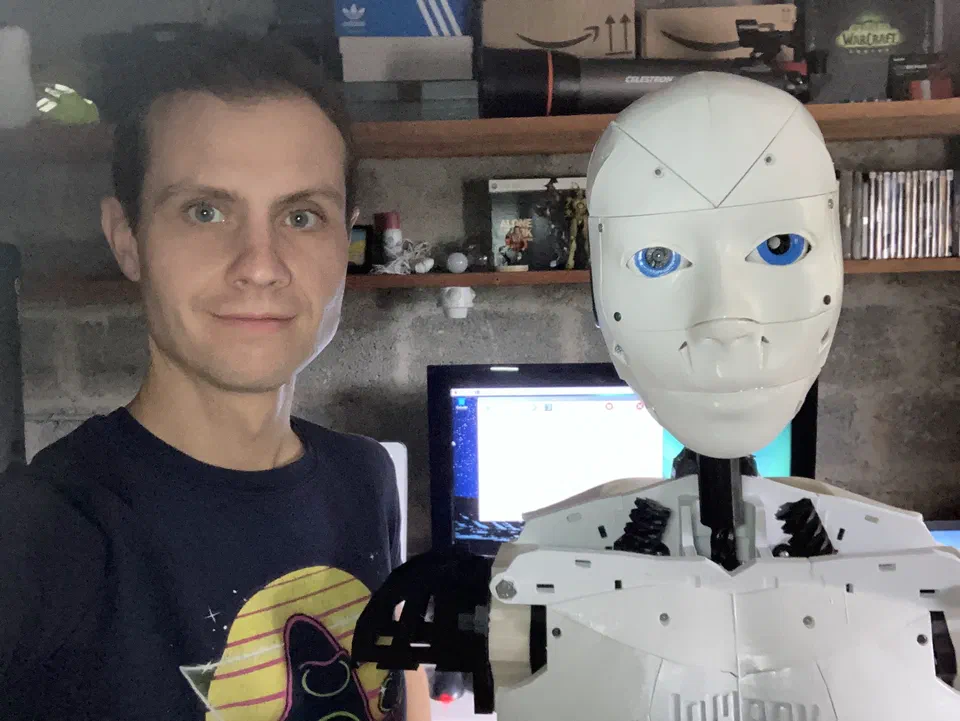
First generation in use in 2021
InMoov
From 3D printing to AI: building robots that can move, speak and interact.
- Contribution
- Fabrication, electronics and software development
- Project
- Third robot under construction
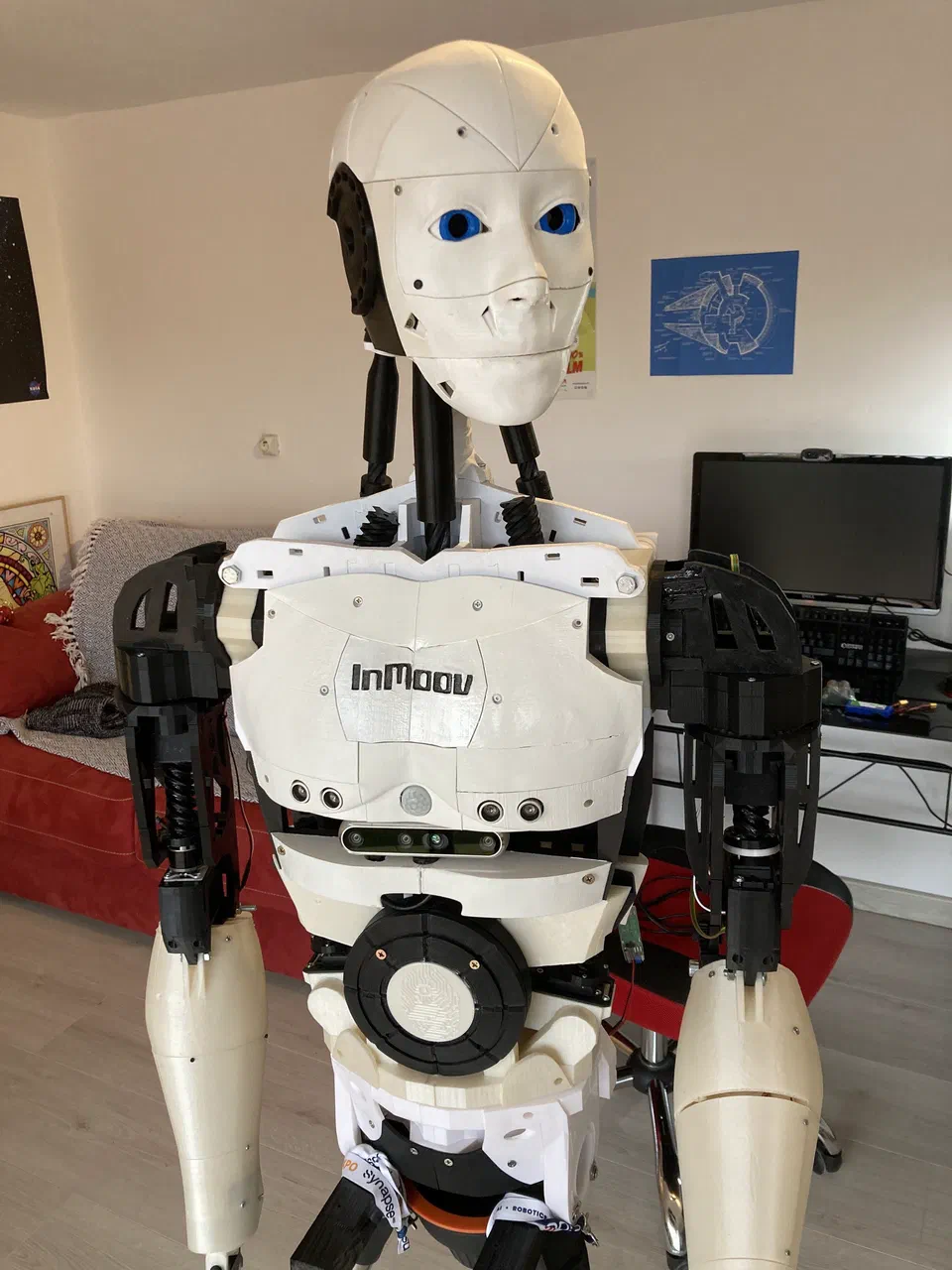
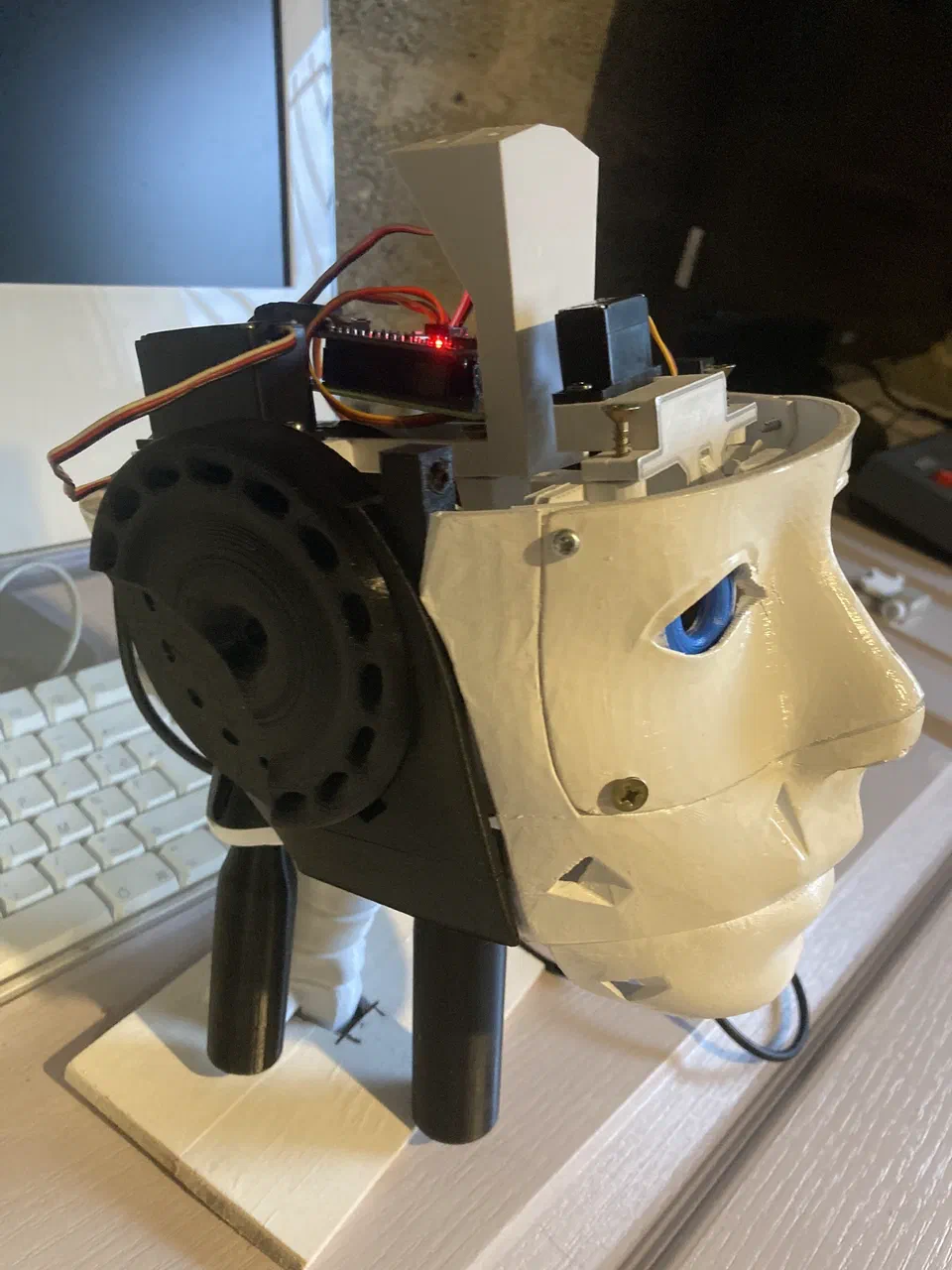
I printed and assembled two InMoov robots, excluding the legs, developing the electronics and software with each version. Both robots have since been sold. Printing the first took four months. After following the project’s recommendations, I gradually developed my own control and interaction solutions.
A first robot controlled from Unity
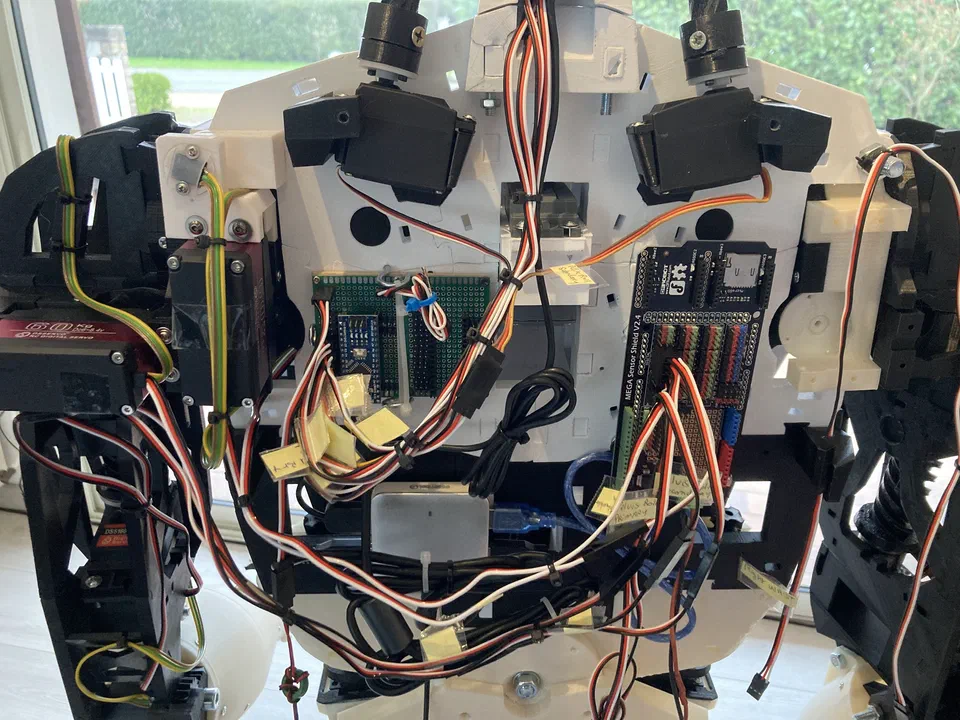
The first robot used an Arduino Nano and an Arduino Mega with a MegaShield, along with two power supplies. A Unity simulation controlled the real movements: Mecanim was used to prepare animations, and Unity’s VR features made it possible to operate the robot remotely.
Dialogue initially relied on an adaptation of the ALICE chatbot for .NET. It was later extended with a text generation API. This first generation brought together simulation, animation, communication with the electronics and conversation.
A second version built around the iPhone
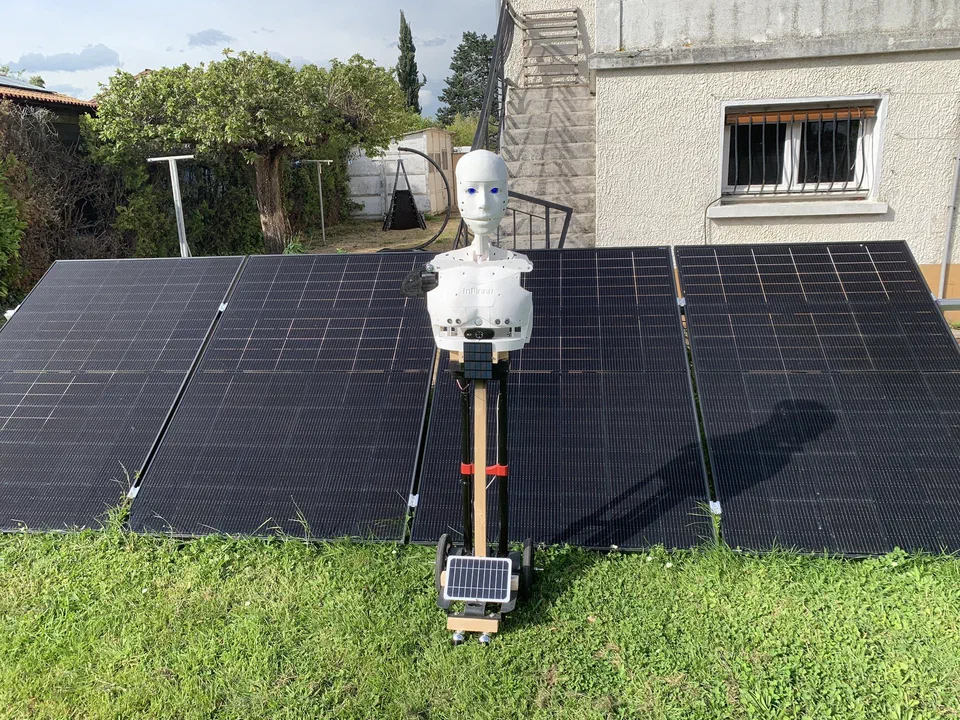
The second robot was based on an ESP32 with Wi-Fi and Bluetooth. An iPhone application written in Swift and SwiftUI combined motor control, speech recognition and speech synthesis.
Dialogue and movement were connected: after a response, the model could produce a small program in an assembly-like language. The application interpreted that program to animate the robot.
This version also included a solar power supply dedicated to the head and jaw. Solar panels provided energy for those movements and speech.
A third generation in preparation
The third robot is under construction. It combines a local LLM with a custom C++ program, alongside work on the strength of the structure.
My experience building aircraft with wood and composites informs this development. I plan to reinforce some parts with fibreglass or carbon fibre to improve rigidity while limiting their weight and fragility.